Living in Boston means dealing with a climate that can’t quite make up its mind. We experience the full spectrum of weather, often within a single week.
When you are choosing window treatments, this unique New England weather matters just as much as your interior design style. A common question we hear at King Shade & Window Co. is: “Should I choose real wood or faux wood blinds?”
On the surface, they may look almost identical. High-quality faux wood has come a long way and often mimics the grain and finish of timber perfectly. However, the difference lies in how they perform, how much they weigh, and – most importantly – how they handle the Boston climate. This guide will break down the pros and cons of each to help you make the right investment for your home.
The Case for Real Wood Blinds
There is a reason real wood blinds have been a staple in high-end design for decades. They offer an elegance and warmth that is hard to duplicate. Usually made from North American hardwoods like basswood, these blinds are lightweight, strong, and incredibly versatile.
1. Aesthetic Appeal and Customization
Real wood blinds offer a rich, organic texture that adds immediate character to a room. Because they are made from natural timber, they can be stained in a wide variety of shades to match your hardwood floors, oak furniture, or mahogany trim. While faux wood generally comes in various shades of white and a few painted colors, real wood blinds excel when you want a rich stain that highlights the natural grain.
2. The Weight Factor
This is a critical practical difference. Real wood is significantly lighter than the composite materials used in faux wood blinds. If you have large, tall windows – common in Boston’s historic homes – real wood is often the better choice.
Why does weight matter? Heavier blinds put more strain on the mounting brackets and internal mechanisms. The lighter weight of real wood makes the hardware last longer and ensures smoother operation over time.
3. Natural Insulation
Wood is a natural insulator. It has a cellular structure that traps air, creating a barrier against temperature transfer. In a drafty older home, closing a set of thick wood blinds can actually help keep heat in during winter and block solar heat gain in summer.
Did You Know? Wood is naturally energy-efficient. Its cellular structure creates tiny air pockets that slow down heat transfer. According to the U.S. Department of Energy, window treatments like blinds can reduce heat gain in summer by up to 45% when completely closed.
The Case for Faux Wood Blinds
Faux wood blinds have surged in popularity, and for good reason. They are typically made from a composite PVC material or a vinyl polymer. They are designed to be tough, durable, and cost-effective.
1. Unmatched Durability and Moisture Resistance
The biggest enemy of real wood is moisture. When wood gets wet or absorbs high humidity, it swells. When it dries out, it shrinks. Over time, this cycle causes real wood slats to warp, crack, or twist.
Faux wood blinds are impervious to moisture. You could submerge them in water, and they would be fine. This makes them the absolute best choice for spaces that see a lot of water or steam, such as:
Bathrooms: Steam from showers won’t damage them.
Kitchens: Splashes from the sink or boiling pots won’t hurt the finish.
Mudrooms and Entryways: Damp coats and umbrellas are no threat.
2. Cost-Effective Style
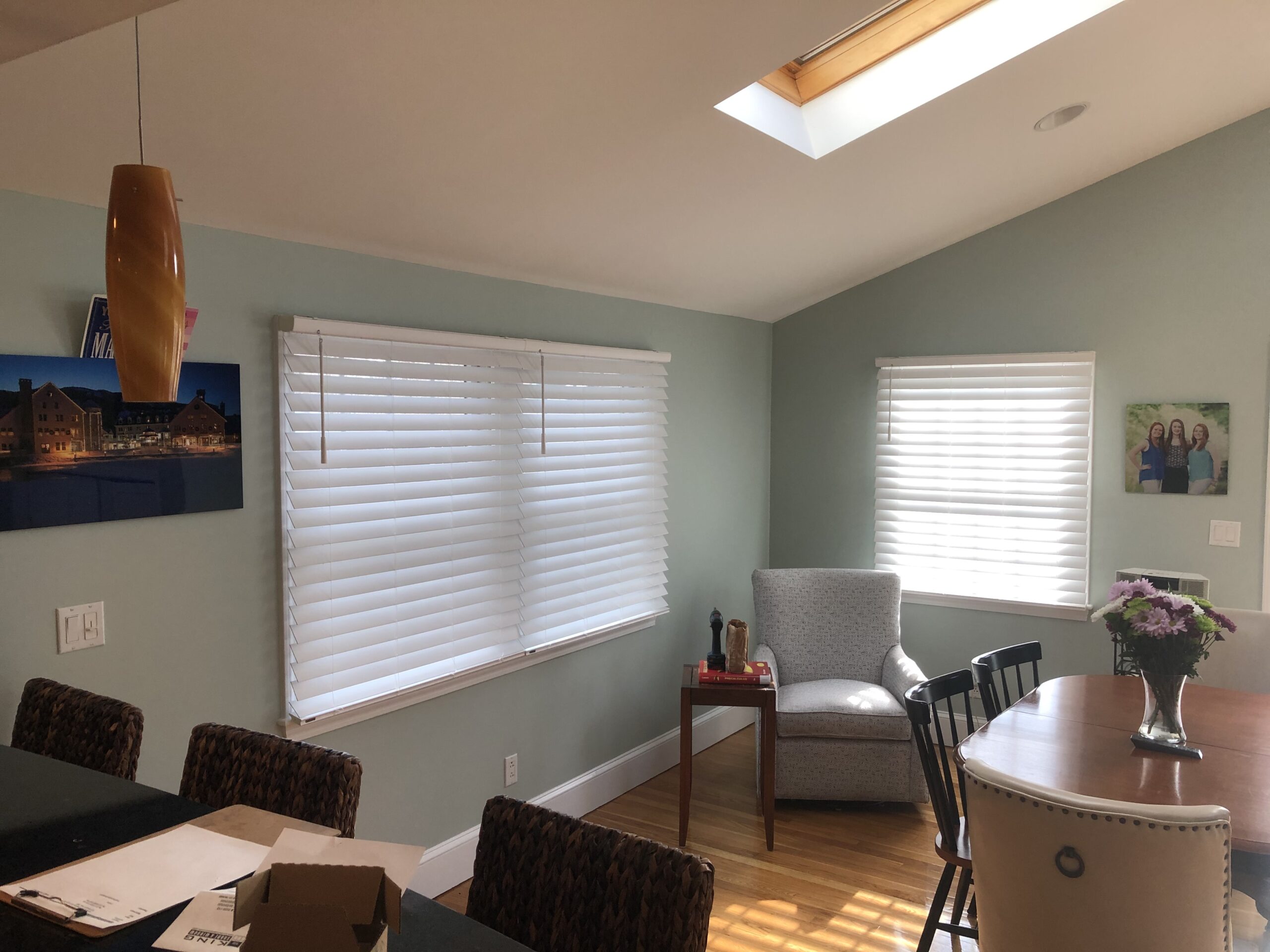
If you are outfitting an entire home or working within a strict budget, faux wood is an attractive option. They generally cost less than real wood blinds while providing a very similar look. For many homeowners, the visual difference is negligible, especially in rooms where the blinds are mostly kept white or off-white.
Today’s options offer an impressive variety of textures and finishes. With custom window treatments, you can find the perfect look to match your specific design vision without compromising on quality.
3. Easy Maintenance
Because they are essentially made of high-grade plastic or composite, faux wood blinds are incredibly easy to clean. You can use standard household cleaners, damp cloths, or even take them down and hose them off if they get particularly grimy.
Maintenance Tip: To keep your blinds looking new, dust them weekly with a microfiber cloth. For faux wood, you can wipe stubborn spots with a damp sponge and mild detergent. For real wood, avoid water; stick to a high-quality wood cleaner or a dry cloth to preserve the finish.
Real Wood vs. Faux Wood Blinds Comparison
| Feature | Real Wood Blinds | Faux Wood Blinds |
|---|---|---|
| Material | 100% North American Hardwood (usually Basswood) | PVC, Vinyl, or Composite Wood |
| Moisture Resistance | Low (Can warp in high humidity) | High (Waterproof and humidity resistant) |
| Weight | Lightweight (Less strain on hardware) | Heavier (More strain on mounting brackets) |
| Durability | Strong, but can scratch or dent | Very durable, resists scratches and bending |
| Cleaning | Dry cloth or wood cleaner only | Damp cloth, soap and water allowed |
| Price Point | Premium ($$$) | Budget-Friendly ($$) |
| Best Rooms | Living Rooms, Dining Rooms, Bedrooms | Kitchens, Bathrooms, Basements, Garages |
| Natural Insulation | Excellent (Natural air pockets in wood) | Good (Solid material) |
| Customization | Wide variety of stains and finishes | Limited to painted colors |
| Ideal For Boston Climate | Best with climate-controlled homes | Best for humid or moisture-prone areas |
The Boston Climate Factor: How to Decide
So, how does the local weather influence your choice?
Summer Humidity: Boston summers can be incredibly humid. If you live in an area without central air conditioning, or if you like to keep your windows open to catch the sea breeze, humidity levels in your home will fluctuate. In these conditions, faux wood is safer for windows that are frequently exposed to damp air.
Winter Dryness: In the winter, heating systems (especially forced air and old radiators) dry out the air inside your home significantly. While high-quality real wood blinds are kiln-dried and sealed to resist warping, extreme changes from humid summer to dry winter can still stress natural wood over many years.
However, if you have invested in modern replacement windows that seal well and control the interior climate efficiently, real wood becomes a much safer option for any room in the house, excluding perhaps the bathroom.
Making the Right Choice for Your Home
Ultimately, the decision often comes down to a mix of budget, location, and window size.
If you are looking to add a touch of luxury to your formal living room or master bedroom, and you have large windows where the lighter weight material will reduce strain on the mounting hardware, real wood is the clear winner. The finish options and elegant appearance make it a premium choice that adds value to your home. For more on how to buy smart, you can check guides like the Blinds and Window Shades Buying Guide.
On the other hand, if you are outfitting a high-traffic family room, a humid bathroom, or a kitchen where grease and steam are daily occurrences, faux wood offers the resilience you need without sacrificing the style you want.
Still Not Sure Which Is Right for You?
You don’t have to guess. At King Shade & Window Co., we have been helping Boston homeowners choose the perfect window treatments since 1948.
Let us handle the measuring and installation to ensure a perfect fit every time.
Call King Shade Today: (617) 323-0600
Frequently Asked Questions
Yes! A pro tip is to use real wood in main living areas (like the living room and dining room) for the premium look and lighter weight on large windows, and use matching faux wood in bathrooms or kitchens where moisture is an issue. As long as the color matches, no one will notice the difference.
High-quality faux wood blinds are designed to withstand heat better than cheap plastic blinds. However, in extremely hot, south-facing windows without ventilation, lower-grade vinyl can sometimes warp. For the absolute best heat resistance in direct sun, real wood or high-grade composite is often recommended.
Generally, yes. Real wood has natural insulating properties due to its cellular structure. It does a slightly better job at stopping the transfer of cold from drafty single-pane windows compared to solid vinyl, helping to keep your heating bills down in January.
This is one of the biggest benefits of faux wood. You can use a damp cloth with mild soap and warm water to wipe them down. For real wood, you have to be much more careful and avoid water to prevent warping.
For large bay windows, real wood is often the better choice because of weight. Faux wood is significantly heavier, which puts more stress on the mounting brackets and hardware over time. Real wood’s lighter weight makes it ideal for tall or wide windows, especially when you have multiple blinds installed side by side in a bay configuration.
For large bay windows, real wood is often the better choice because of weight. Faux wood is significantly heavier, which puts more stress on the mounting brackets and hardware over time. Real wood’s lighter weight makes it ideal for tall or wide windows, especially when you have multiple blinds installed side by side in a bay configuration.